
Disputes & Chargebacks
Quick answer: A chargeback is a buyer disputing a charge with their bank. The amount is held, the Ticketing Co. team submits evidence on your behalf, and the bank decides in 30–90 days. Respond fast and keep clear records.
A chargeback is when a buyer contacts their bank to dispute a charge, asking the bank to reverse the payment rather than coming to you directly. They are an unavoidable part of any ticketing operation, but understanding how they work and responding quickly gives you the best chance of a successful outcome.
How chargebacks work
When a buyer files a chargeback with their bank, the bank opens a dispute and The Ticketing Co. is notified. Here is what happens next:
The disputed amount is temporarily withheld from your payout while the case is under review.
You receive an email notification with the dispute details.
The Ticketing Co. team submits evidence to the bank on your behalf. Depending on the situation, the team may also reach out to you directly for supporting information.
The bank reviews both sides and makes a decision. This process typically takes 30 to 90 days.
If the dispute is won, the funds are released. If it is lost, the disputed amount is deducted from your payout.
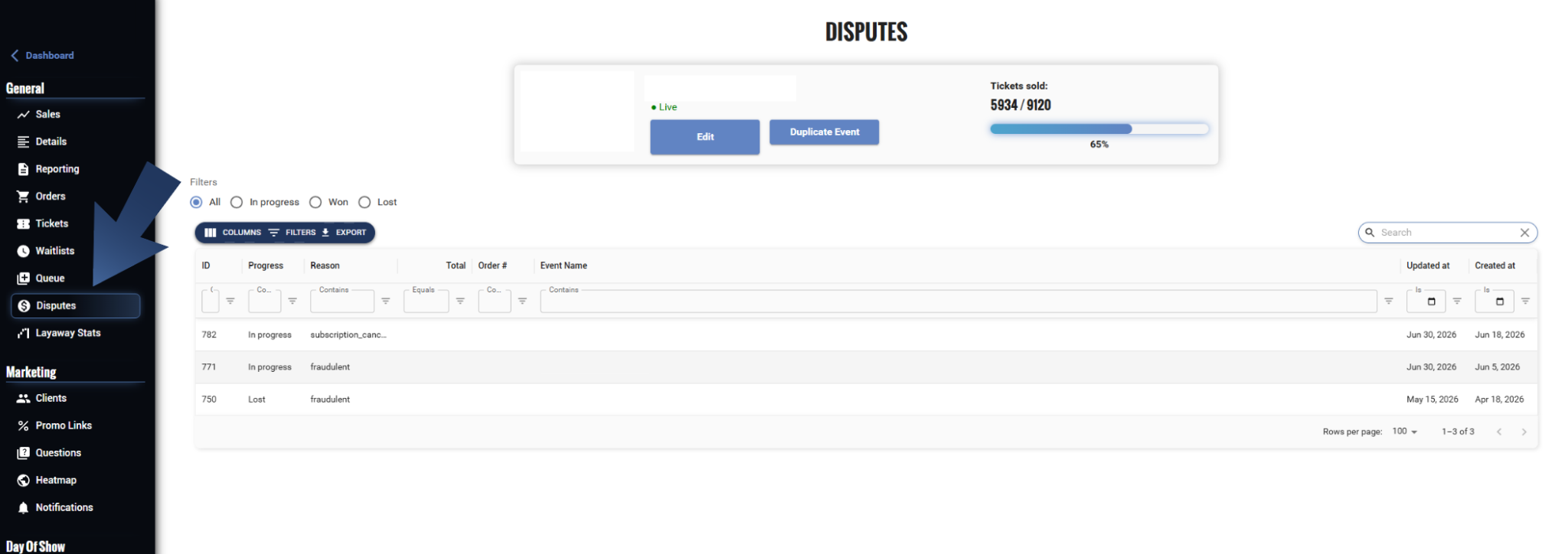
Disputes tab: showing dispute status (Won/Lost), reason, order number, and dates
Important Chargebacks carry an additional fee regardless of the outcome. The fee is charged by the credit card processor — it is an amount The Ticketing Co. cannot control. Preventing chargebacks in the first place is always more cost-effective than contesting them.
How The Ticketing Co. handles disputes
The Ticketing Co. team manages the dispute process on your behalf to remove the burden from you as an organizer. The team contacts the buyer promptly and fights disputes that appear to be filed in error. Depending on the situation, the team may reach out to you for additional evidence such as check-in records, event photos, or attendee communications.
Warning When a dispute is lost, additional fees apply on top of the original disputed amount. Keep this in mind when deciding whether to contest a dispute. The team will advise you if a case is unlikely to succeed.
Common chargeback reasons and how to respond
Reason | Best response |
|---|---|
"I do not recognise this charge" | Submit the order confirmation and ticket delivery record. Many of these resolve in your favour. Buyers often forget purchases or do not recognise the merchant name on their statement. |
"I did not receive what I paid for" | Submit the ticket delivery record and check-in log if the buyer attended. If they did not attend, submit your event policies confirming that no-show is not grounds for a refund. |
"I was charged but the event was cancelled" | If you issued refunds, submit proof of that. If the event ran as scheduled, submit check-in data, attendee communications, and any photographic evidence of the event taking place. |
"Duplicate charge" | Submit the order history showing only one charge was made for this buyer. |
Preventing chargebacks
The best chargeback is the one that never happens. A few practices significantly reduce your dispute rate:
Publish a clear refund policy. Buyers who understand your policy upfront are far less likely to go to their bank instead of coming to you.
Respond to refund requests promptly. A buyer who receives no response will often file a chargeback out of frustration. Declining a refund politely and explaining your policy keeps most buyers from escalating.
Send a post-event follow-up. A quick thank-you email after your event reinforces the positive experience and closes the loop on any lingering concerns.